£0.00
(0 items)
British Association (BA) threads are one of the most common thread systems found in older British engineering, electrical equipment, instrumentation, model engineering and restoration projects. Although largely superseded by metric fasteners in modern manufacturing, BA screws, nuts and bolts are still used in many industries and remain essential for maintaining vintage machinery and heritage equipment.
This guide explains the BA thread system, provides a complete BA thread chart, and includes information on thread pitch, tapping drill sizes, clearance holes and common applications. You'll also find links to our range of BA fasteners available from stock.
What is a BA Thread?
BA screw threads are named after the “British Association” for Advancement of Science and were put together in 1884 and standardised and published in 1903. They are characterised by small dimensions described as 2BA, 4BA, 6BA and 8BA; the bigger numbers denote smaller screws. The odd and bigger numbers are rarely used although still available and Masons regularly see enquiries for these sizes! The sizes are defined in metric terms 0BA being 6mm and 1mm pitch, although the threads have different forms to metric.
BA threads are specified by British Standard BS 93:1951, BA fasteners such as screws are commonly manufactured in accordance with BS57 and are available in a variety of head styles including cheese head, raised countersunk, countersunk and pan head designs.
Common industries using BA screws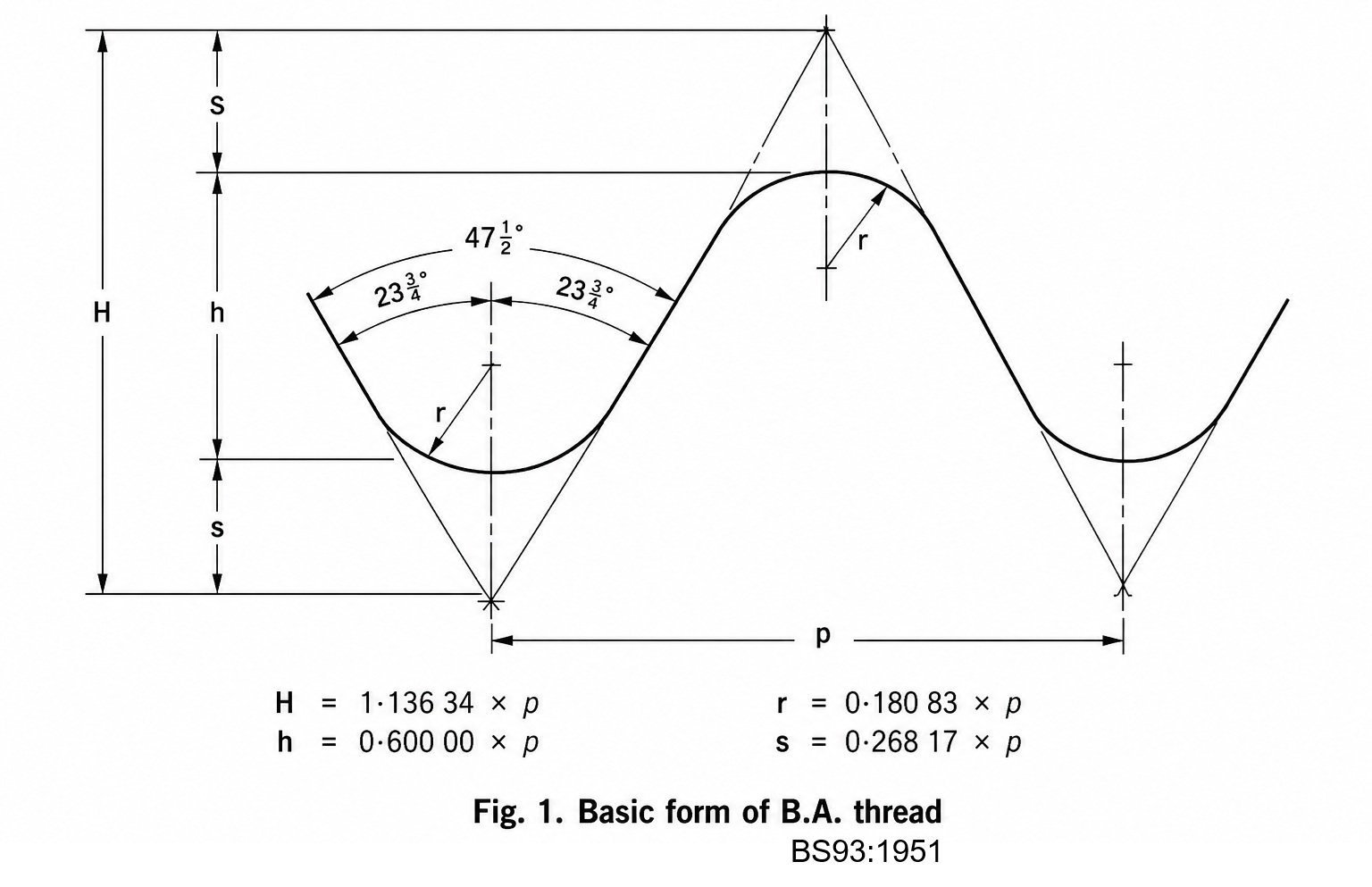
BA Thread Chart
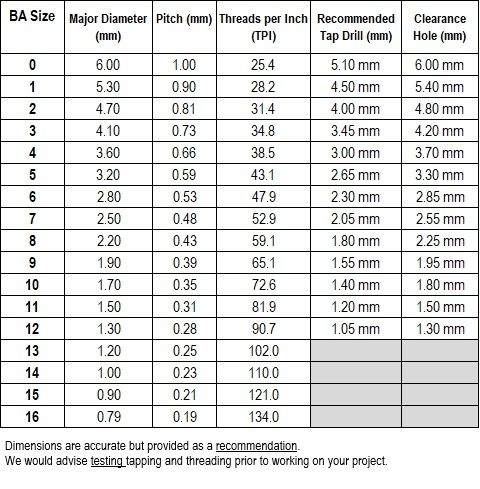
Download the Chart in PDF Format
Frequently Asked Questions
FAQ: Tap Drill – This is the specific size of drill bit used to create a hole before you cut threads (using a tool called a tap). Choosing the correct tap drill ensures the finished thread has the correct engagement and strength.
FAQ: Clearance Hole: clearance hole allows a fastener (like a bolt or a screw) to pass freely through one component before engaging with a threaded hole or nut. The hole is intentionally larger than the thread diameter to prevent the screw binding. Clearance holes are essential in a variety of woodworking, metalworking, and engineering applications.
FAQ: The BA Thread formula - BA threads are based on a geometric progression rather than arbitrary dimensions, with each size reducing by approximately 0.9 of the previous diameter and 0.9 of the previous pitch.
FAQ: Which tap drill should I use?
For general engineering work, we recommend using the British Standard recommended tap drill sizes shown in the chart above. Alternate drill sizes can be used where the preferred size is unavailable, but the recommended sizes will generally produce the best thread quality.
FAQ: Identifying and unknown BA screw?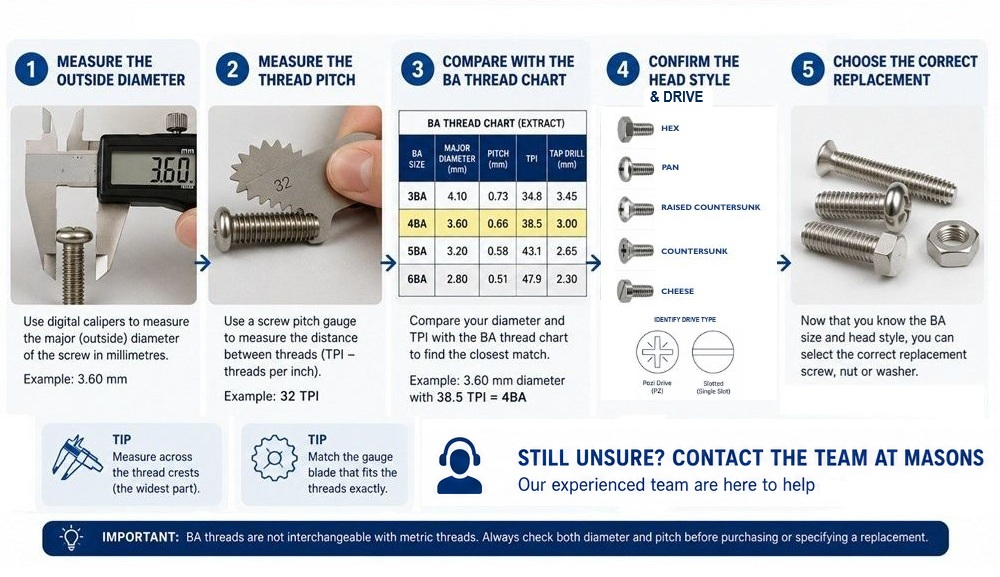
Looking for BA Fasteners? Check out our related products below
Masons are adding stock lines all the time, if you still can’t find what you’re looking for on our website, Contact us. We hold many BA sizes as stock!